
Point 1: Is Truth Real and Can We Actually Know It?
Is Truth Real and Can We Actually Know It? Is there such a thing as truth? Can we actually know it? Truth Is About Reality, Not Preference At its core, truth refers to accuracy. It is a statement that reflects reality. If someone claims that a certain chemical reaction produces heat, that claim is either […]
Point 2: The Opposite of True Is False
We live in a cultural moment where people hesitate to say something is false. To many people today, disagreements feel impolite, certainty feels arrogant, and conviction feels dangerous. Because of this, we are told things like: But there is a problem with this thinking. Reality does not bend to preference. Contradictory claims about reality cannot […]
Point 3: Is It True That a Theistic God Exists?
Few questions are more important than this one: Does a theistic God exist? Not a vague spiritual force or an impersonal energy. Not a projection of human imagination. But a personal, eternal, intelligent Creator who exists independently of the universe. This question is not merely emotional or cultural. It is rational. And it deserves careful […]
Point 4: The Universe Had a Beginning

For most of human history, many believed the universe was eternal – that it had always existed in some form. An endless chain of matter and motion stretching infinitely into the past. But modern science has dramatically altered that picture. Today, the dominant scientific evidence indicates that the universe is not eternal. It had a […]
Point 5: The Universe Was Designed

Look around. The world is not chaotic noise. It is structured. Measured. Balanced. Governed by laws that are astonishingly precise. One of the most compelling arguments for design in our universe comes from what scientists call fine-tuning – the observation that the fundamental constants and conditions of the cosmos fall within extremely narrow ranges that […]
Point 6: Moral Values Are Objective
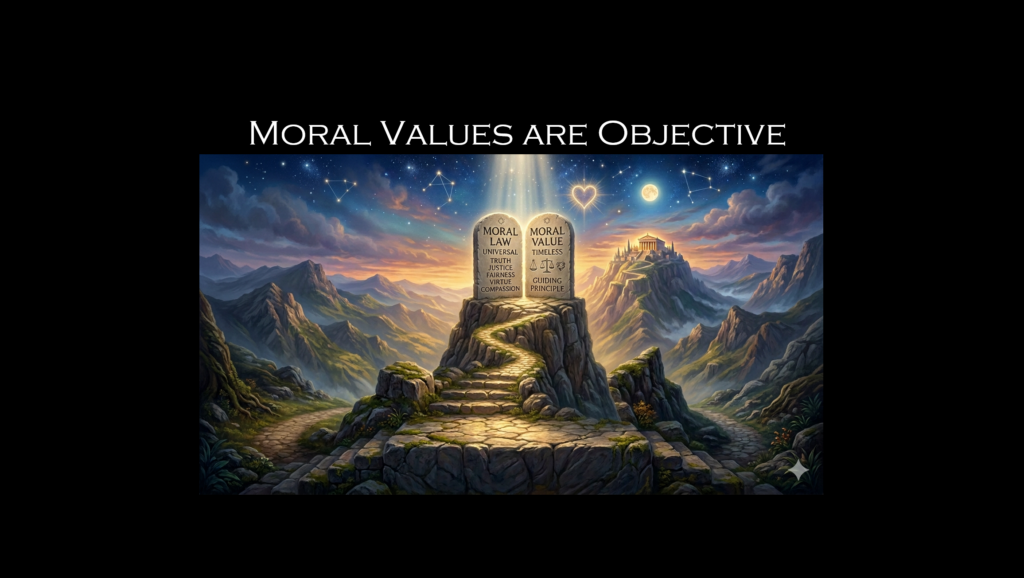
Few questions are more important than this one: Are right and wrong real, or are they just personal preferences? Some argue that morality is nothing more than cultural conditioning or individual opinion. Others believe moral truths are objective – true regardless of what any individual or society thinks. The case for objective morality is not […]
Point 7: The New Testament Is Historically Reliable
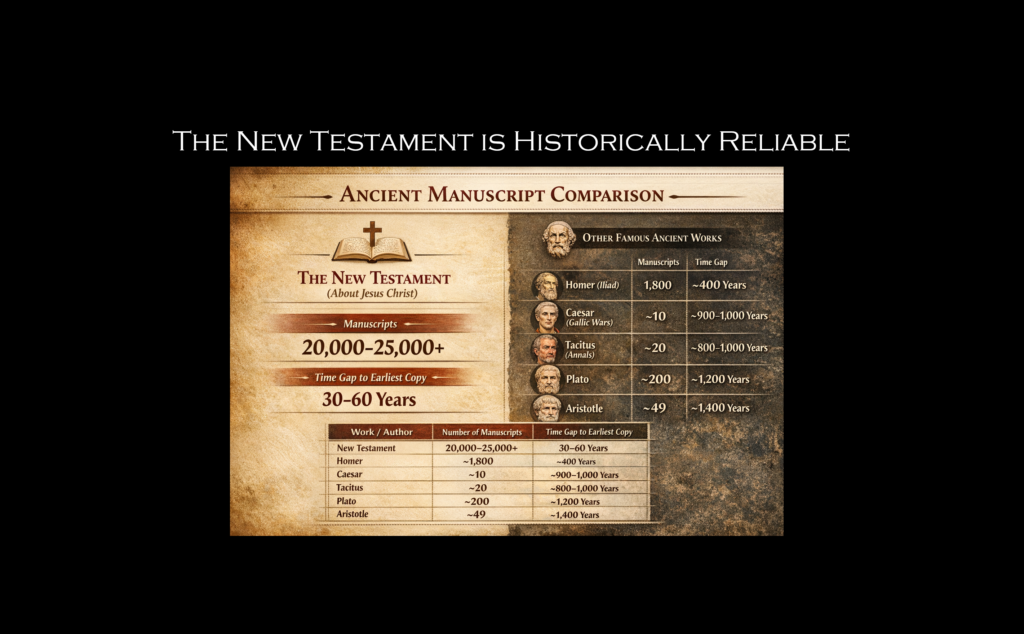
When discussing Christianity, everything ultimately rises or falls on a simple question: Can the documents that tell the story be trusted? The credibility of the New Testament is not merely a matter of faith. It is a historical question. Like any set of ancient documents, it can be examined through manuscript evidence, authorship, dating, and […]
Point 8: The New Testament Documents Record Eyewitness Testimony
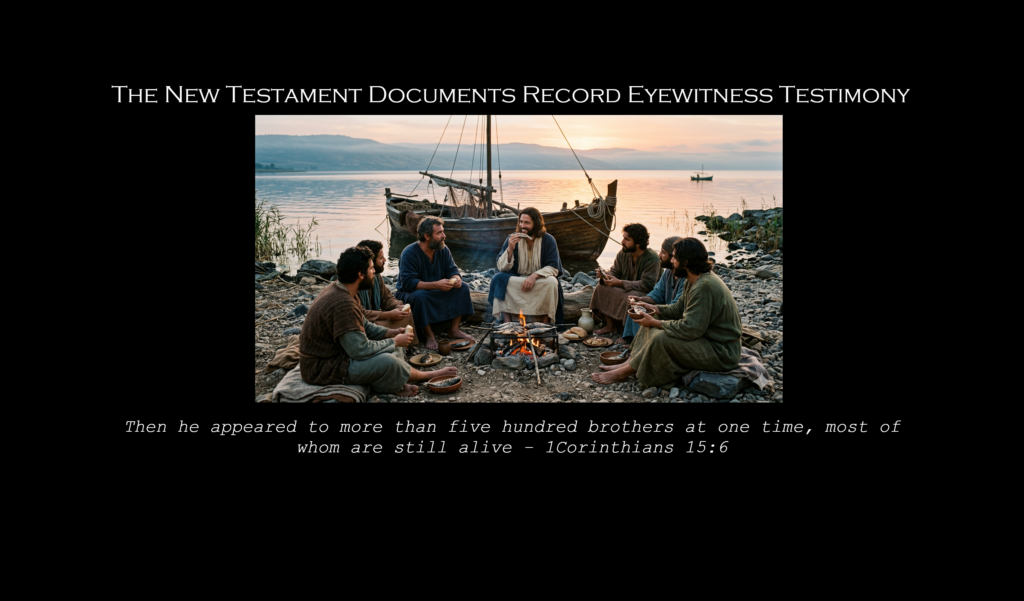
One of the central questions surrounding the New Testament is this: Are the Gospels legends that developed over time, or are they rooted in eyewitness testimony? This is not merely a theological issue. It is a historical one. Ancient documents can be evaluated by examining when they were written, how they were sourced, and whether […]
Point 9: Jesus Claimed to Be God
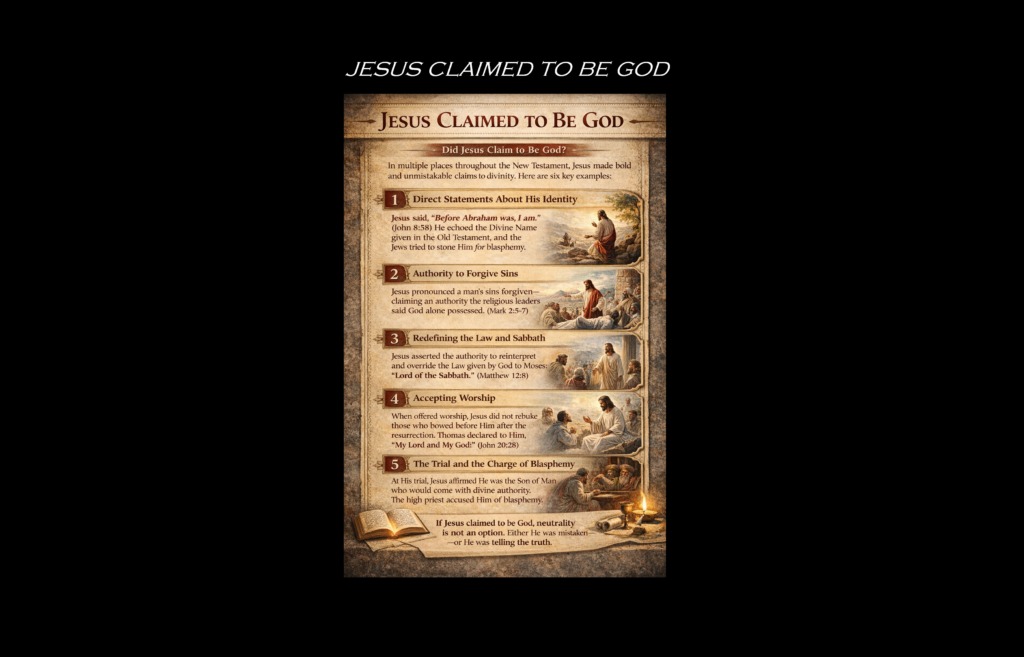
Few questions are more significant than this one: Did Jesus actually claim to be God? Some suggest that Jesus was merely a moral teacher whose followers later exaggerated His identity. Others argue that the earliest Christian writings present Him as making bold and unmistakable claims about Himself – claims that go far beyond the role […]
Point 10: Jesus’ Claims Were Miraculously Confirmed
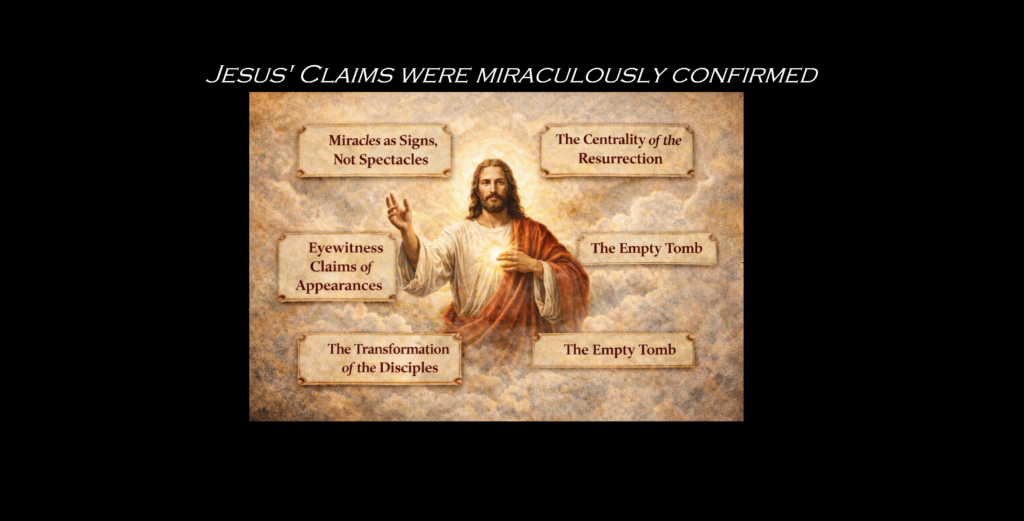
If Jesus made extraordinary claims about Himself, the natural question follows: Was there any evidence to support them? According to the New Testament documents, Jesus did not ask people to believe His identity without demonstration. His teachings were accompanied by acts described as miracles – public events meant to confirm that His authority was not […]